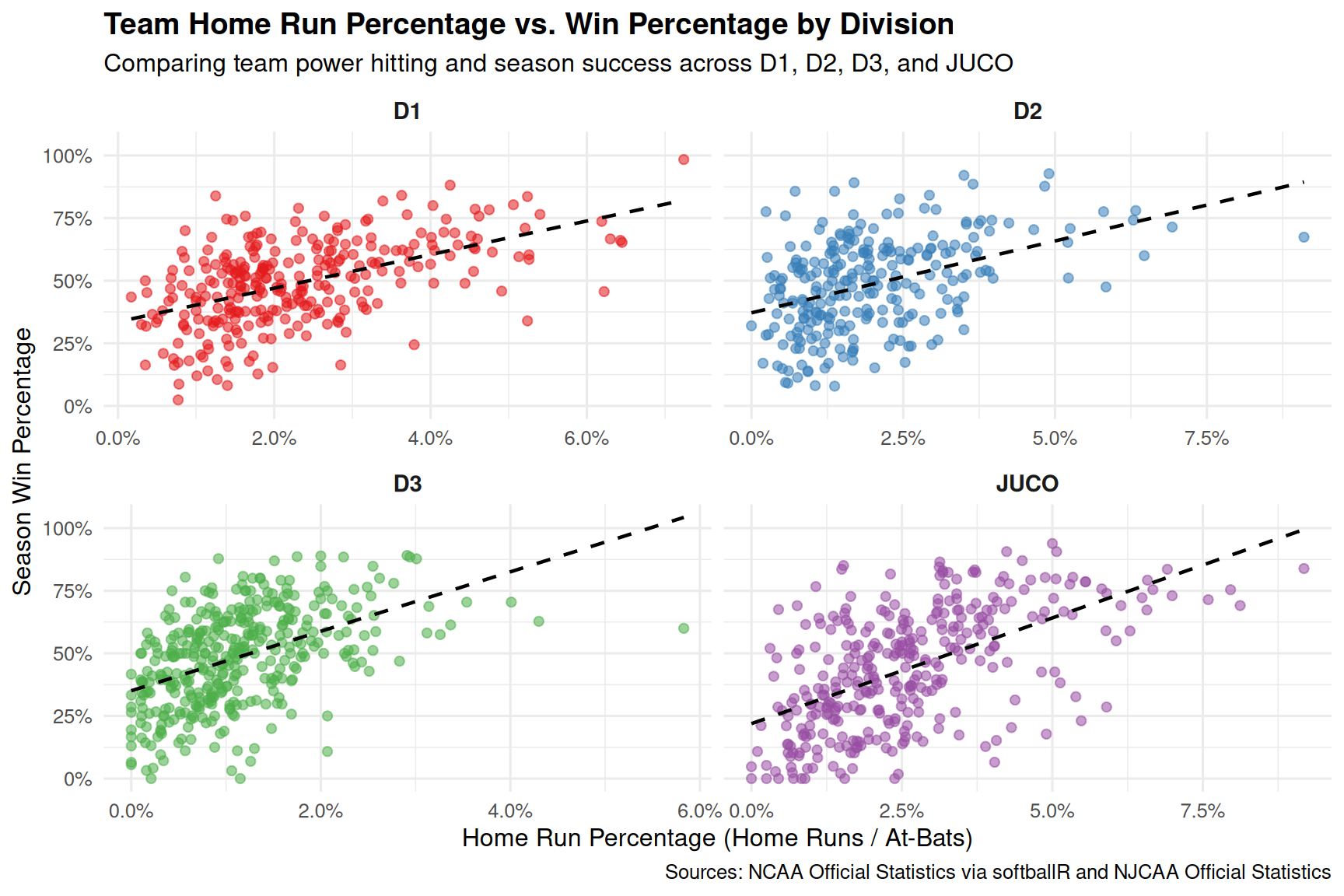
College Softball: Home Run Power vs. Winning Across Divisions
Does Home Run Percentage Drive Winning Across College Softball?
This project expands our previous analysis of Division I hitting in Milestone 4 to examine team-level performance across four collegiate tiers: NCAA Division I, NCAA Division II, NCAA Division III, and Junior College (JUCO / NJCAA).
Specifically, we investigate: if a team has a higher home run percentage (home runs per at-bat), do they have a higher probability of winning games?
Division-by-Division Analysis
NCAA Division I
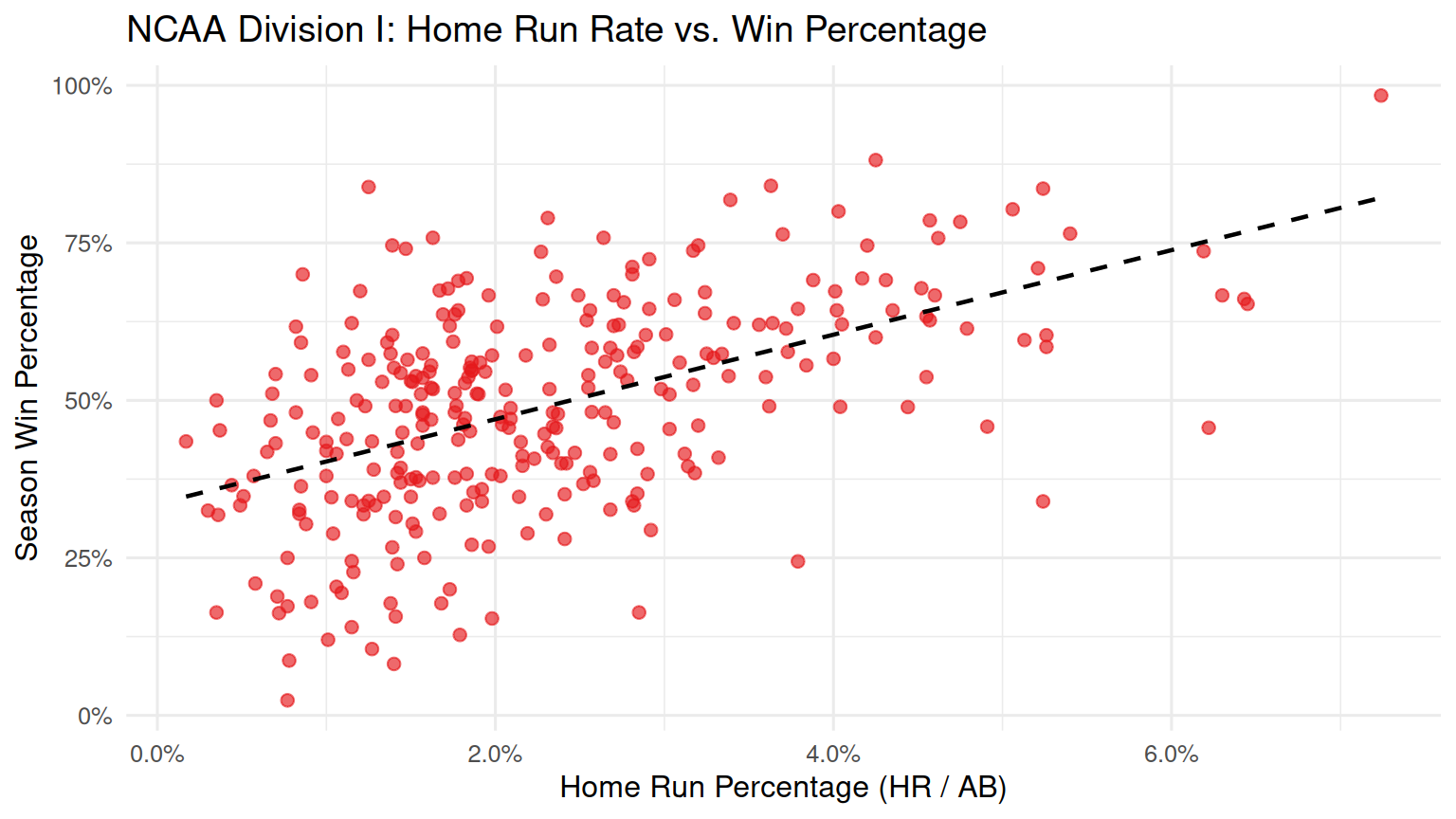
In Division I (\(r = 0.52\)), teams with above-median home run rates win 55.5% of their games compared to 42.7% for teams below the median. This ~13 percentage point advantage demonstrates that when facing opponents with lower home run production, power-hitting teams hold a substantial edge in game outcomes.
NCAA Division II
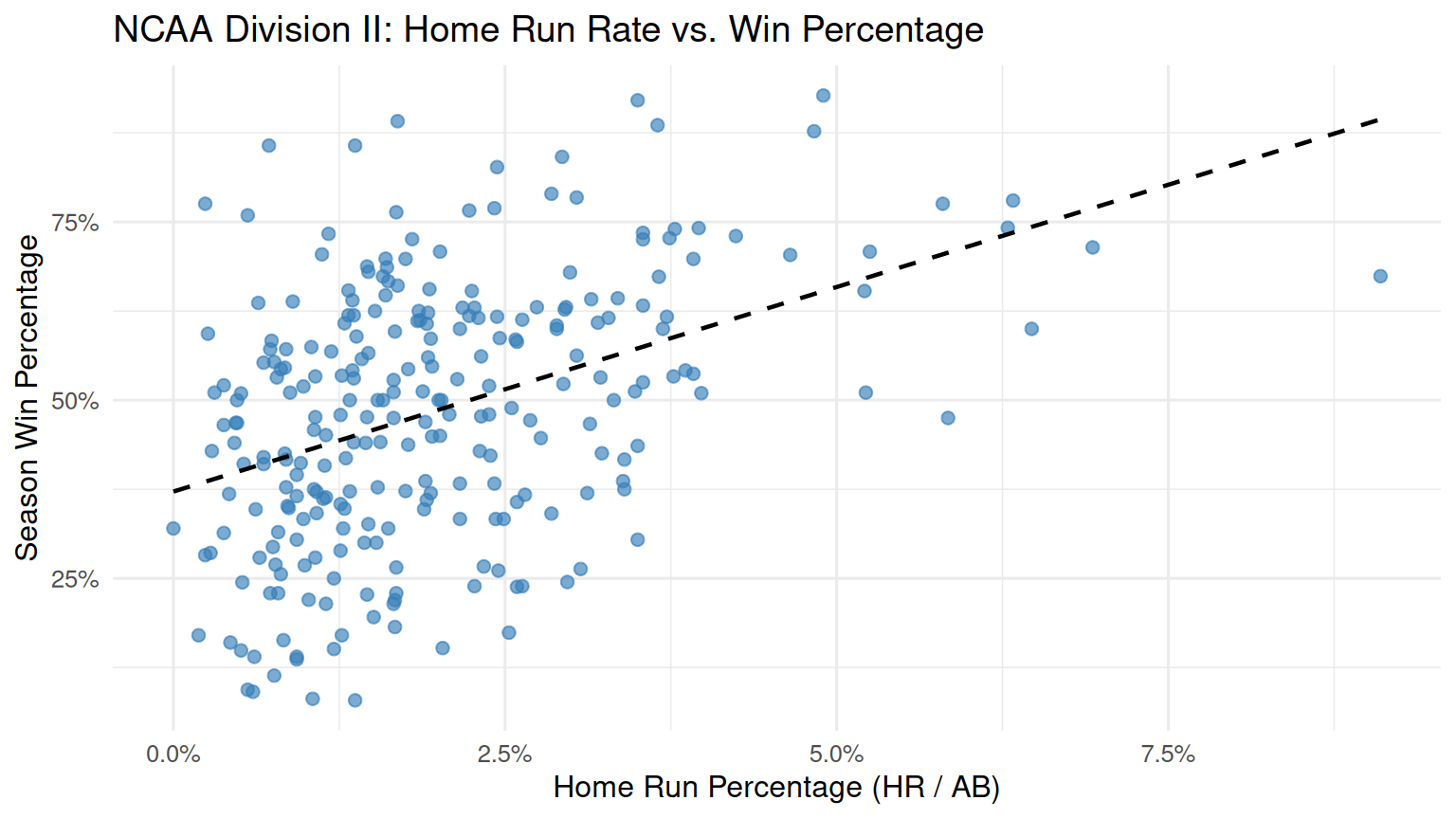
In Division II (\(r = 0.42\)), teams in the upper half of home run rate average a 55.1% win rate, compared to 42.2% for teams in the lower half. Teams with home run rates exceeding 3% rarely finish below .500.
NCAA Division III
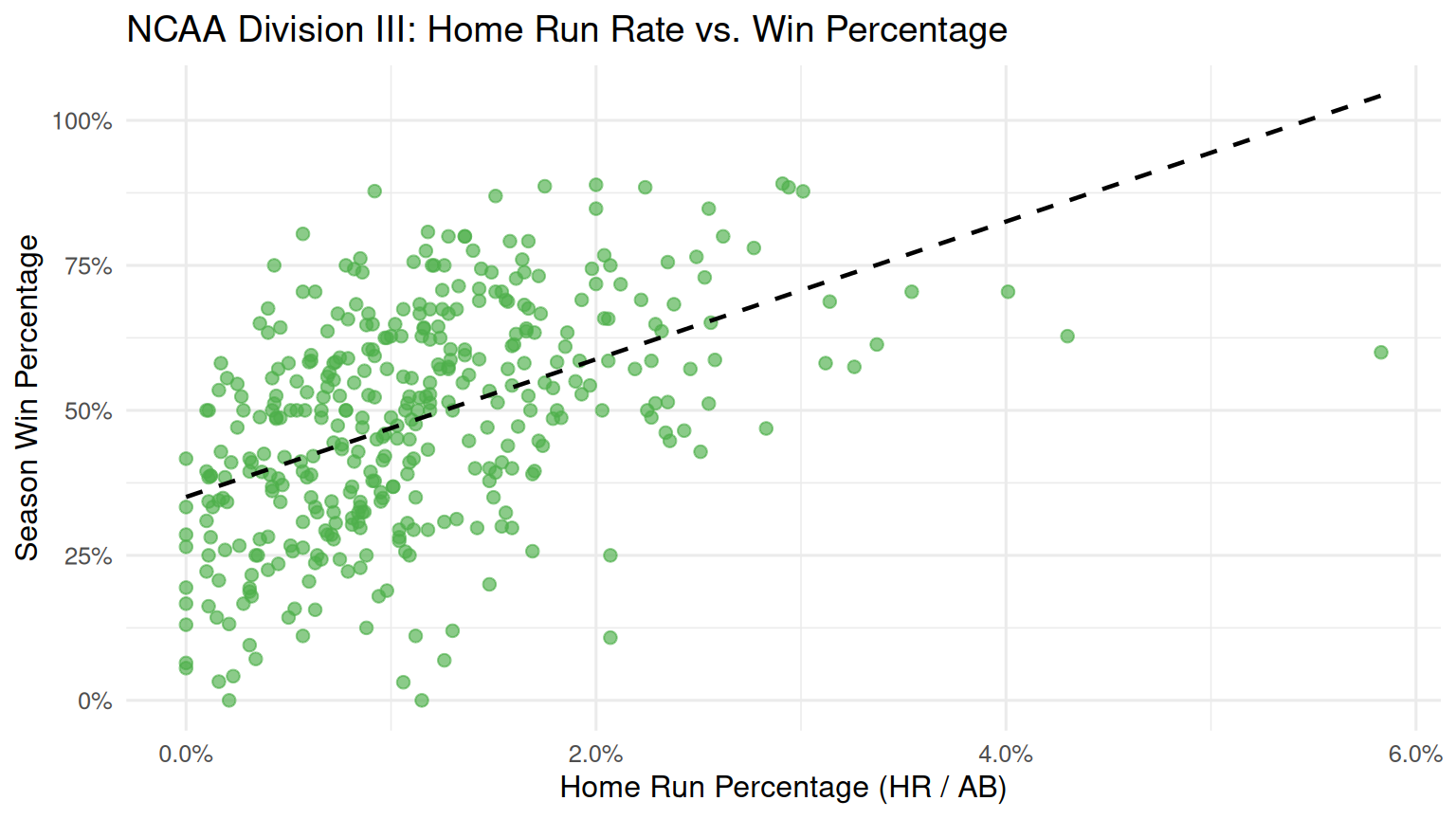
In Division III (\(r = 0.48\)), home runs are comparatively rare (averaging 1.1% of at-bats). Because power is scarce, teams with higher home run rates hold a massive competitive advantage, winning 56.2% of their games versus 40.6% for low-power programs.
Junior College (JUCO / NJCAA)
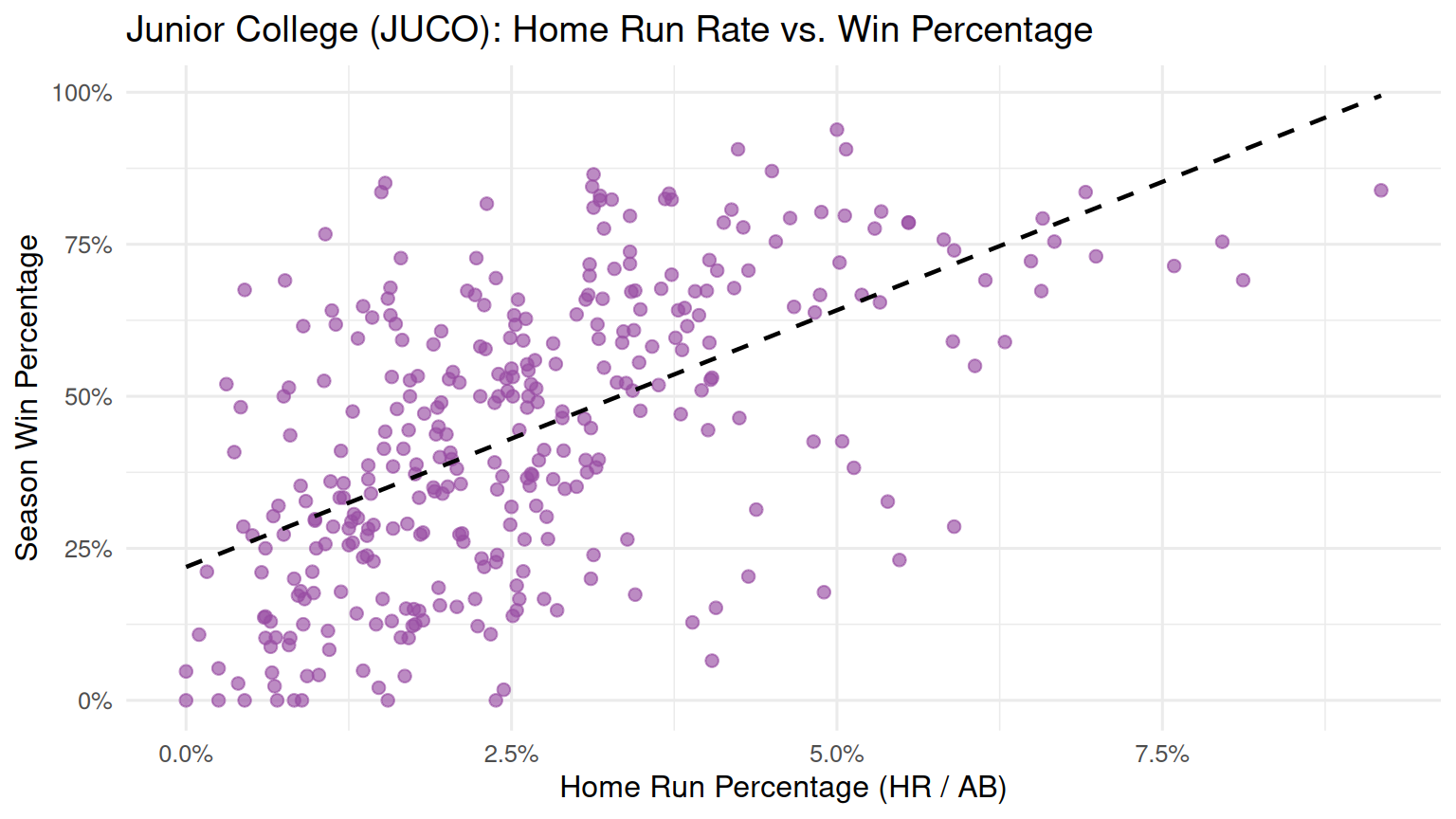
Junior college softball shows the strongest relationship (\(r = 0.57\)) and widest disparity: top-half home run teams average a 55.1% win rate, while bottom-half teams win only 32.6%. In a high-slugging environment, lacking home run power leaves teams severely disadvantaged in game outcomes.
Summary: Does Higher Home Run Percentage Affect Game Outcomes?
Across all four collegiate divisions (D1, D2, D3, and JUCO), teams with higher home run percentages consistently maintain significantly higher win percentages than teams with lower home run percentages (a 13 to 22.5 percentage-point edge). When a power-hitting team plays against a team with lower home run production, the higher home run team has a substantially greater likelihood of winning the game.